
Check your local codes first
Codes, permits, and design requirements vary by city and county. Before you buy or install, especially on a large project, check with your city’s building or permit office and work with a licensed engineer and electrician. This guide is general information, not engineering or legal advice.
A bullhorn bracket lets one pole carry more than one light. It mounts on top of the pole, and its arms hold the fixtures. The angle between the arms decides where the light goes.
Common layouts
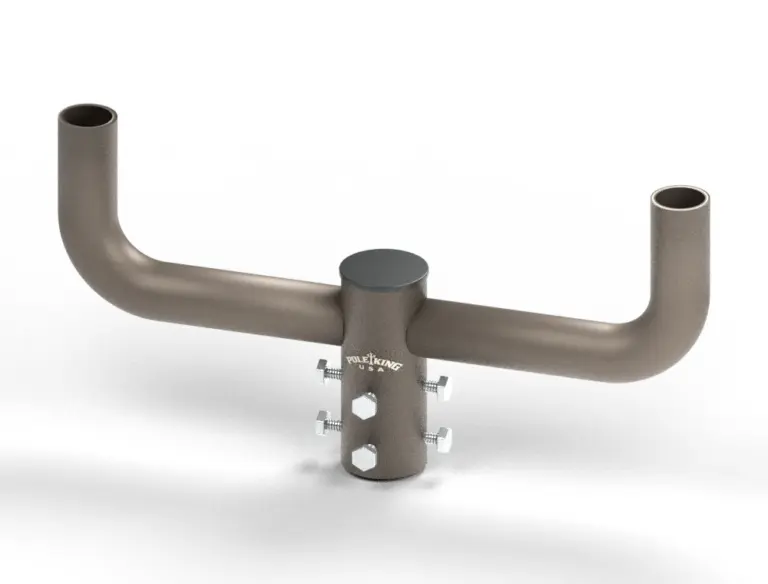
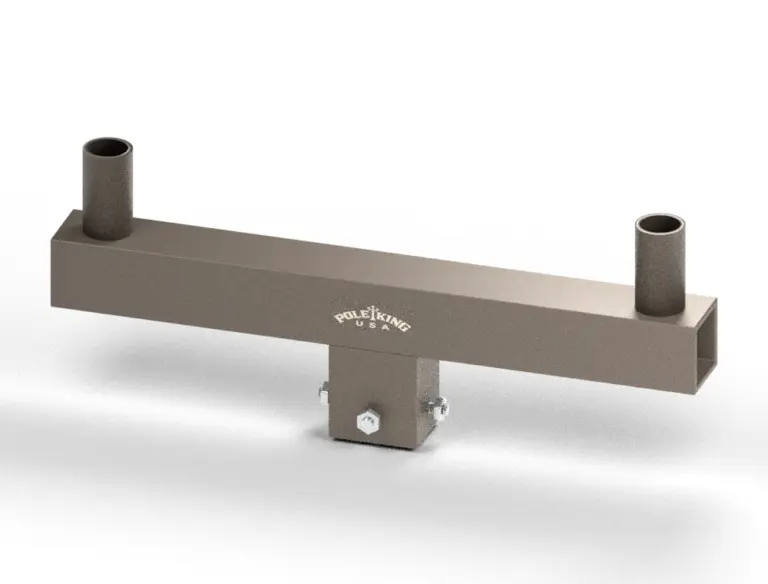
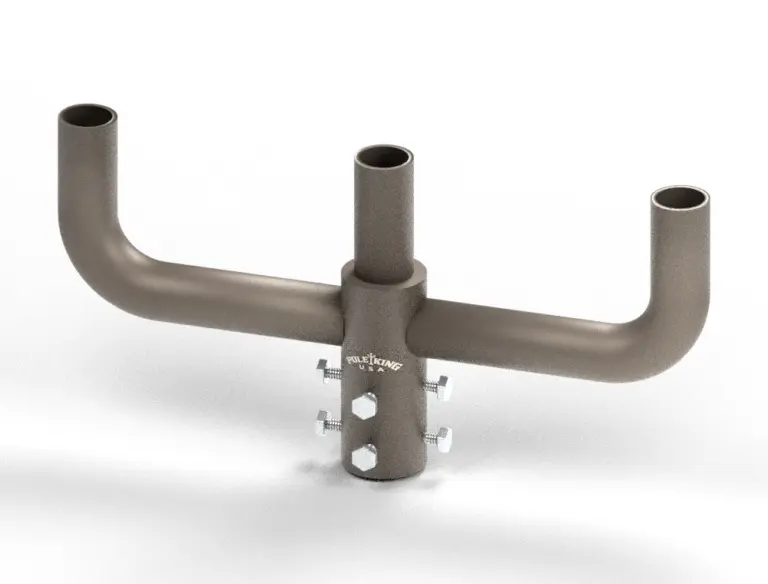
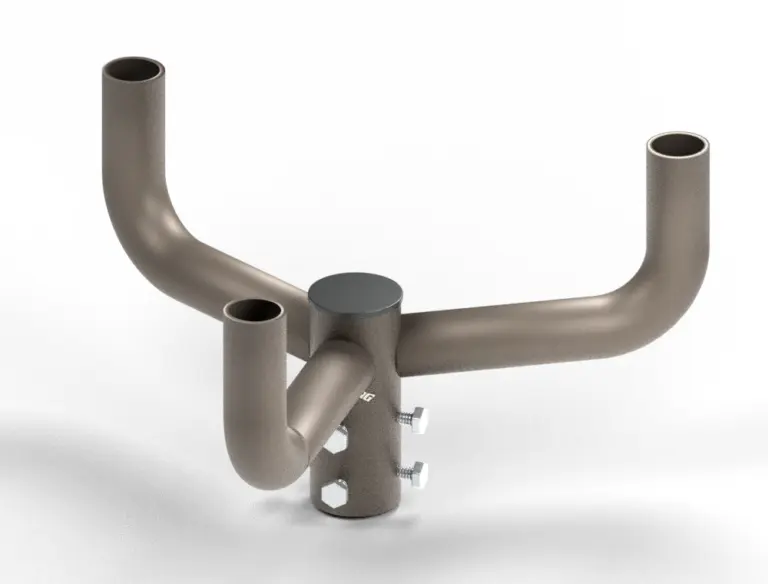
- 180° double: two arms pointing in opposite directions. Pole King USA offers a round version with curved arms and a square version with a straight crossarm.
- 180° triple, inline: two outer arms plus a center tenon, all in one line, for three fixtures. See the 180° Triple Bullhorn (Round, Inline).
- 120° triple: three arms spaced evenly around the pole. See the 120° Triple Bullhorn (Round).
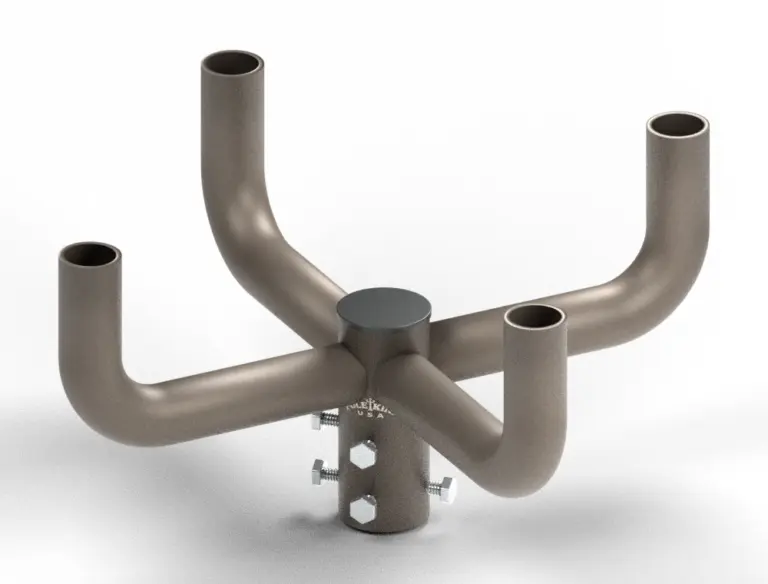
- 90° quad: four arms, one in each direction. See the 90° Quad Bullhorn (Round).
How to choose
- Where the light needs to go. Poles along an edge or a drive lane often use one or two lights aimed in one line. Poles in the middle of a lot often light more than one direction.
- Pole shape and top. The bracket must fit the pole top or a tenon adapter on it.
- Fixture mounting. Confirm each fixture fits the bracket arms or tenons.
- Total load. More fixtures add weight and wind area. Confirm the pole is rated for the full setup.
A lighting layout from a designer or engineer will show how many lights each pole needs and which way they should face. Bring that layout to us and we can match brackets to it.
Not sure what you need? Build a pole kit step by step, or request a quote and our Dallas team will help you match the parts. You can also call us at (972) 685-0112.